Editorial Standards
Source. Verify. Document. Publish.
The four stages that govern every entry in the Taldon natural supplement catalogue. A process designed to keep commercial pressure and speculation outside the editorial boundary.
01 — The Review Process
Four stages. No exceptions. No shortcuts.
Source Identification
The review begins with the identification of a candidate formulation or ingredient category. This can arise from reader requests, manufacturer submissions, or editorial observation of an emerging ingredient category in the published nutritional literature. In each case, the source pathway is noted in the entry record.
At this stage, the editorial team establishes the primary manufacturer or supplier contact and requests full formulation documentation: ingredient list with quantities per standard daily serving, source region, and any available supply-chain certification. Formulations for which this documentation cannot be provided within a reasonable review period are placed on hold and not advanced to Stage Two.


Composition Verification
With formulation documentation in hand, the editorial team cross-references the stated ingredient quantities against the available published nutritional research for each constituent. This is not an independent laboratory analysis — Taldon does not conduct its own analytical testing. It is a desk-based cross-referencing exercise against recognised nutritional science publications and food supplement composition databases.
Each ingredient is assessed for: (a) the quality and volume of available research; (b) the recognised nutritional role at the stated serving quantity; and (c) any notable interactions or considerations that a knowledgeable reader would wish to be aware of. These assessments are recorded in the draft entry.
Batch Documentation
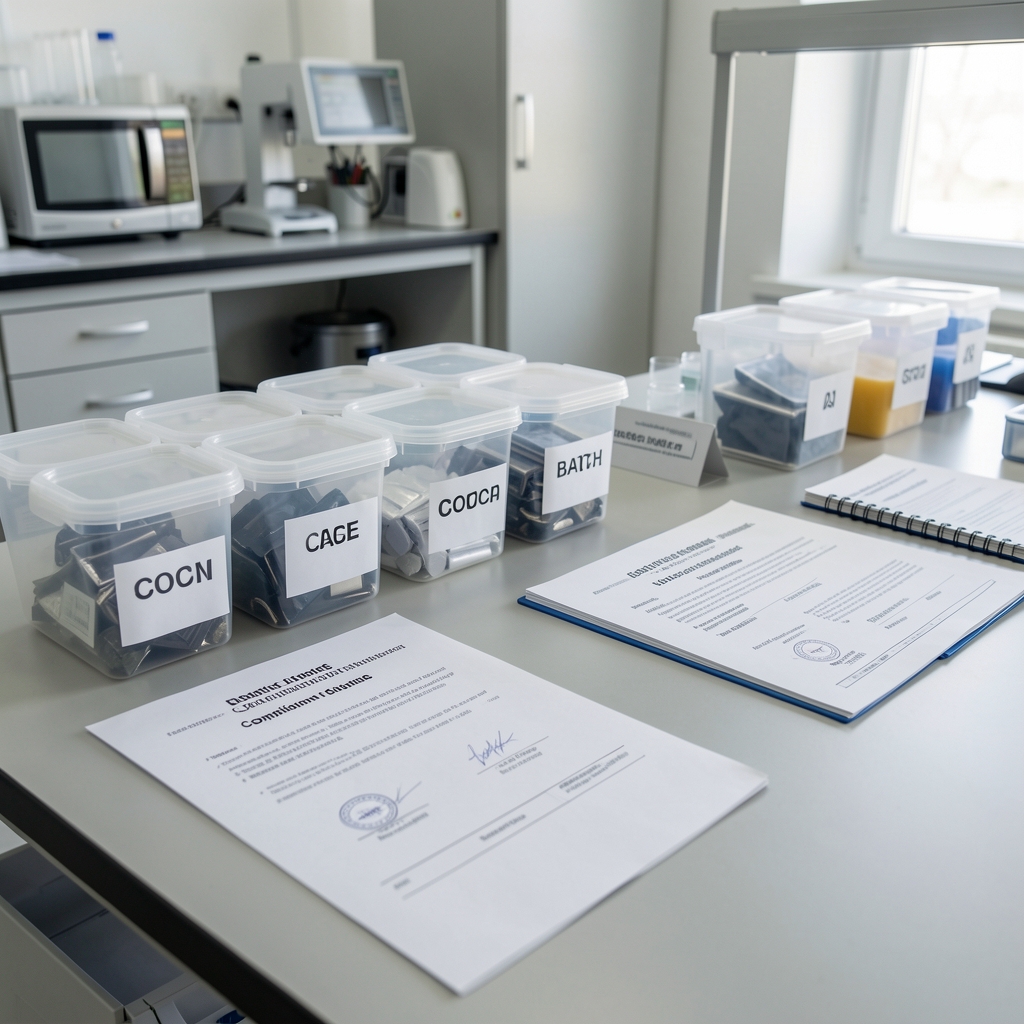
The third stage addresses the physical production of the formulation. The editorial team requests, where available, a certificate of composition from an independent analytical laboratory. This certificate must reference the specific production batch by lot number and confirm that the stated ingredient quantities are present in the finished product at time of manufacture.
Where a manufacturer supplies batch certificates, the issuing laboratory name and lot reference are cited in the published entry. Where no certificate is available, this absence is explicitly noted — the entry is not withheld on this basis alone, but the absence of batch verification is made transparent to the reader. Taldon does not misrepresent the verification status of any entry.


Editorial Notation and Publication
The final stage converts the documented review into a published catalogue entry. Editorial notation adds context that the raw data alone does not convey: the sourcing geography and what that implies for supply-chain transparency, the evidence base quality rating for each ingredient, cross-references to related entries, and any considerations a reader maintaining an active lifestyle should note.
Published entries carry a publication date and, where applicable, a revision date. When manufacturers update their formulation, source geography, or batch verification provider, the corresponding entry is updated and the revision is logged. This version history is part of the entry record, accessible on request to editorial correspondents.
02 — Sourcing Standards
Where ingredients are sourced and why it matters.
Ingredient sourcing geography is one of the most consequential and least reported aspects of supplement quality. Taldon has maintained consistent sourcing documentation standards since 2019.
Plant-based ingredients are reviewed for origin region, harvest cycle, and extraction or drying method. Active ingredient concentrations in botanical extracts can vary substantially by region, season, and processing approach. The catalogue notes these variables where supplier documentation permits.
Active ingredients are sourced from documented suppliers, with each batch accompanied by a certificate of composition. Sourcing prioritises suppliers whose facilities maintain food-grade processing standards.
Mineral constituents are reviewed for their chelation or salt form, as bioavailability differs materially across forms. Magnesium glycinate, citrate, and oxide have different absorption profiles; the catalogue entry notes the specific form where documentation is available.
Mineral source geography — the mining or extraction region — is noted where the manufacturer discloses it. Food-grade mineral processing standards are a minimum requirement for inclusion in the catalogue.
Adaptogen class ingredients — ashwagandha, rhodiola, ginseng, cordyceps, and related botanicals — are reviewed with particular attention to species identification, root versus aerial part designation, and standardised extract ratios. The catalogue records these distinctions because they affect the consistency of active content across production batches.
The Taldon catalogue is oriented toward the United Kingdom supplement market. Sourcing reviews consider UK and EU food supplement regulatory context where relevant, and note any supply-chain considerations specific to this market. This does not constitute regulatory advice; it is contextual documentation for an informed reader.
03 — Evidence Base Ratings
Not all nutritional research carries the same weight. Taldon says so.
One of the distinctive features of the Taldon catalogue is the explicit evidence-base rating assigned to each ingredient within a formulation entry. The rating reflects the editorial team's assessment of the volume and quality of published nutritional research supporting the documented role.
This rating is not a recommendation or a rank. It is a transparency measure: a reader encountering an ingredient with a limited evidence base can calibrate their interpretation of the documented role accordingly. Taldon does not hide limited evidence behind confident language.
Multiple independent research studies, broad consensus in published nutritional science. The documented nutrient role is well-supported. Examples: zinc contribution to normal immune function, magnesium contribution to normal muscle function, vitamin C contribution to normal immune system function.
Multiple studies exist but with some variability in methodology or outcome. The documented role is broadly supported but the evidence base is not as consistent as the robust tier. Examples: ashwagandha contribution to normal stress resilience, rhodiola rosea contribution to cognitive endurance.
A smaller number of published studies, some with methodological limitations or short observation periods. The documented role is the most plausible interpretation of available evidence, but Taldon notes that the base is not yet settled. Readers should interpret limited-rated ingredient claims with appropriate reserve.
04 — Quarterly Revision Cycle
The catalogue is a live document, reviewed every quarter.
Formulation entries are not static publications. Each quarter, the editorial team reviews outstanding entries for: manufacturer formulation changes, updated batch verification data, new published research affecting ingredient evidence ratings, and supply-chain changes affecting sourcing documentation.
When a change meets the threshold for a material update — a change in ingredient form, quantity, or source region; a significant new research publication; or the addition or removal of an ingredient — the entry is revised and the revision date updated. Minor editorial corrections are recorded in the internal version log but do not update the published revision date.
Review cycle
Review cycle
Review cycle
Review cycle
05 — Supplier Documentation Standards
Full Ingredient Disclosure
Every supplier must provide a complete ingredient list with quantities per standard serving. No proprietary blends without quantity disclosure. No partial disclosures. Any formulation whose total ingredient disclosure is incomplete — even if explained as commercially sensitive — does not advance past Stage One.
Independent Batch Certificate
Suppliers who provide third-party batch analysis certificates from accredited independent laboratories are classified as verified in the catalogue. The certificate must reference the specific lot number and confirm ingredient quantities against label claims. This standard is preferred but not a strict entry requirement — its absence is clearly noted.
Supply Chain Audit Documentation
Some suppliers provide supply-chain audit records, origin certificates, or sustainability documentation covering the journey of primary ingredients from source to production. Where this documentation is available, it is noted in the entry. It is not a requirement for inclusion but contributes to the sourcing transparency rating assigned to the entry.
06 — Methodology Questions
Common questions about the review process.
The Catalogue